Finding the “Fairway” — How Professional Women Are Changing the Game, Part 1
This is the first blog in a two-part series that highlights the work that Dr. Cheryl Rowe-Rendleman and other women in the corporate world are doing to make golf a more inclusive and accessible sport. Part two will be published later in summer 2022 in tandem with the Women in Ophthalmology (WIO) Golf Charity Tournament, an outing that pairs industry leaders in the medical field together with women in eye care. For the past few years, the charity outing has supported the Surgical Scope Fund.
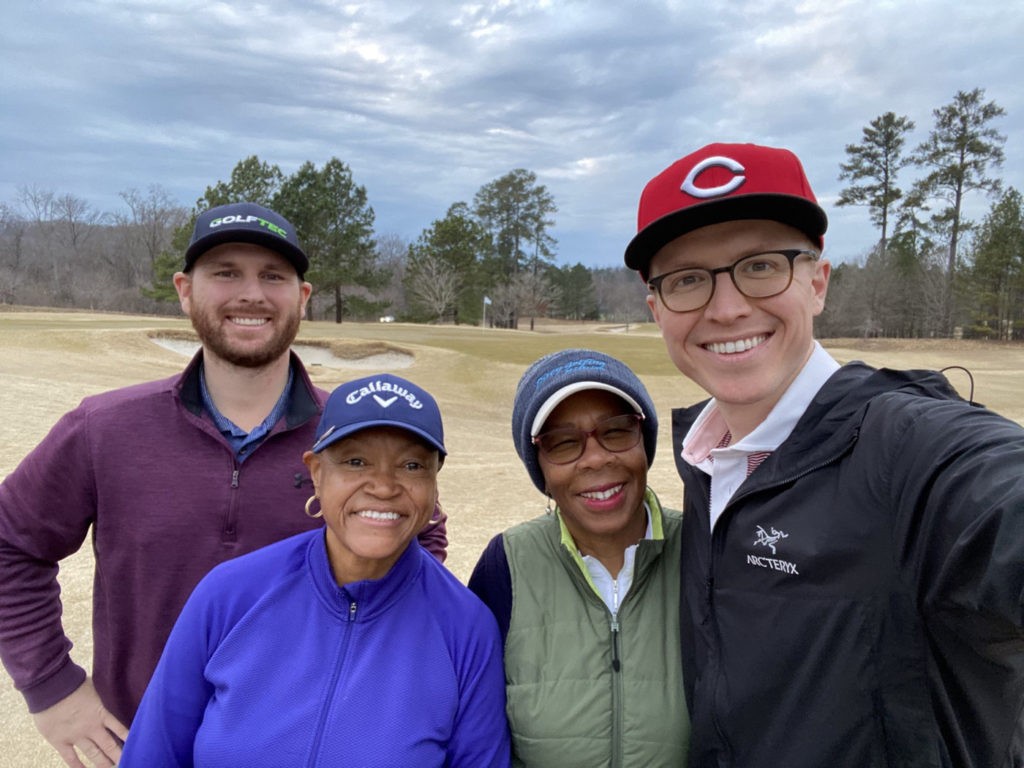
Why do we play golf? For some it is an individual pursuit, a competition against one’s self and perhaps even a form a meditation.
But the meaning of golf is also gendered. In the corporate world, the golf course has long been considered a place for liaising and making important business connections. A 2016 article from Forbes stated that 90% of Fortune 500 CEOs play golf, and 2021 data from ABC News showed that only 8.2% of Fortune 500 CEOs were women. Five uninterrupted hours to develop rapport and mix casual banter with intense negotiation. That means a lot of important conversations made in the absence of women.
In talking to women for this blog, while one inhibition to access is financial, less appreciated is the absence of a supportive, fair, and non-judgmental environment.
Dr. Cheryl Rowe-Rendleman, CEO of Omar Consulting Group and an avid golfer, has experienced this firsthand throughout her professional and personal life. After she realized that male colleagues at her old company were heading off on the weekend to play golf and make important business decisions without her input, she became determined to ensure that other women would not have the same experience.
Women golfers face a number of stereotypes, one being that they hold up the course.
One way Dr. Rendleman does this is by supporting the Women in Ophthalmology (WIO) Charity Golf Tournament, an annual outing that brings together professional women in the medical field to play golf in an easygoing setting with potential colleagues from industry. Another is by connecting with others all over the world and especially in the North Carlina Research Triangle Area to create a sisterhood of passionate amateur golfers.
Michelle Keaton Barrow, who owns a real estate business in Raleigh, North Carolina and has been playing golf for 25 years, is one of those people. After graduating from North Carolina State University with a degree in engineering, a friend set her up with some golf lessons, and she was quickly hooked.
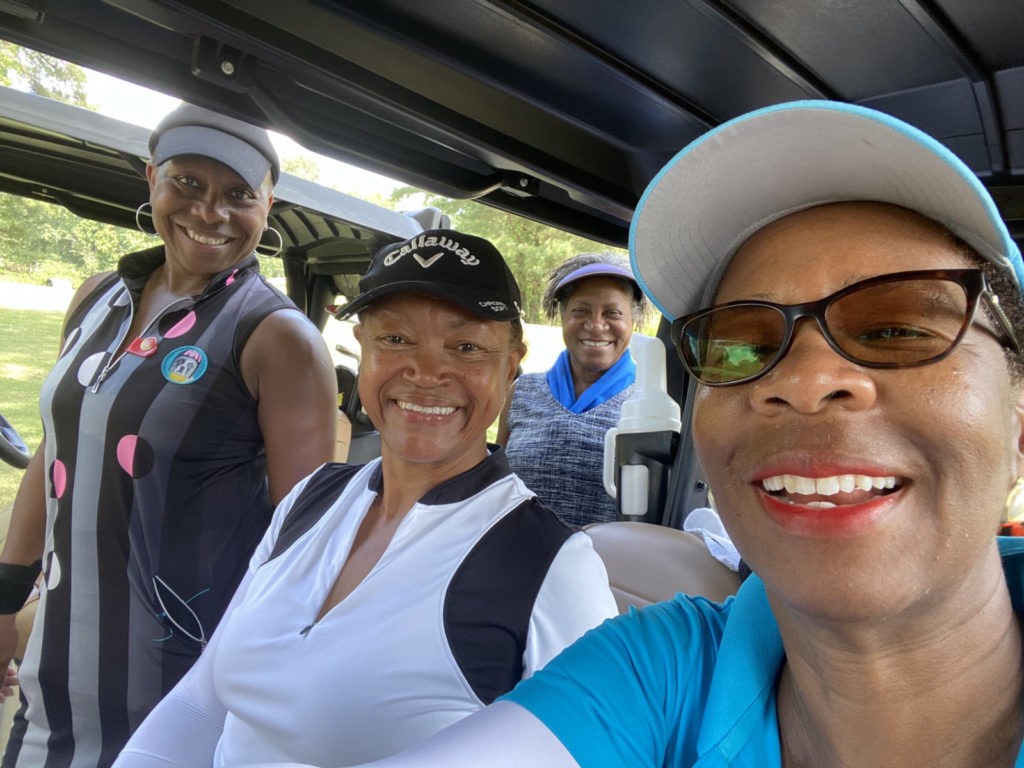
She recalls an incident on the course in 2020 that provides a glimpse into one the negative stereotypes that female golfers confront, which is that they “hold up” the course.
Keaton and Dr. Rendleman were paired with two men, one of whom had poor sight out of one eye (a source of great interest for the ocular diseases scientist Rendleman) which made it difficult to follow the flight of the ball and led to a lot of extra time spent searching in the woods.
Having access to a sisterhood of supportive, fair, and non-judgmental peers means everything to newcomers of the sport.
“The men playing behind us automatically assumed that Cheryl and I were the reason that we were playing so slow and it wasn’t,” recalls Keaton. “So he felt it was his obligation to berate us women in the parking lot.”
A friend of Dr. Rendleman, Dr. Kaja Heater-Lee, is the Vice President of Triangle Women in Golf (TWIG), a North Carolina based 501(c)3 organization that promotes golf among African American women and youth. The two women met each other through the organization.
Founded in 1997 and celebrating its 25th anniversary in 2022, TWIG does everything from organizing trips, tournaments and social activities for its adult members, to introducing girls to golf and helping them to develop the life skills like integrity and self-discipline that are key to the sport. TWIG raises money through its non-profit foundation, which started in 2017, to pay for things like lessons and transportation to tournaments.
Through these initiatives and more, the hope is that women and girls will feel empowered to enter the golf world and glean whatever benefits they choose, whether that’s the simple gratification of a cleanly struck ball, a chance to compete on the LPGA Tour, or an invite to the Sunday morning game with male colleagues.
Sources:
Golfers Make Better Business Executives (forbes.com)
Women CEO Report – Women Business Collaborative (wbcollaborative.org)
Author: Julius Oppenheimer is a self-described “freelance golfer” who has been playing and writing about the sport for 15 years. A graduate of NYU, he tried his hand at professional golf before transitioning into a role at Radda Golf, a lifestyle apparel brand at the forefront of pushing the game’s aesthetic and culture forward. He is the author of The Tips, a popular online newsletter that exists at the intersection of golf and streetwear. Outside of golf, he enjoys photography, discovering new art galleries and breweries, and is a passionate supporter of Arsenal Football Club.